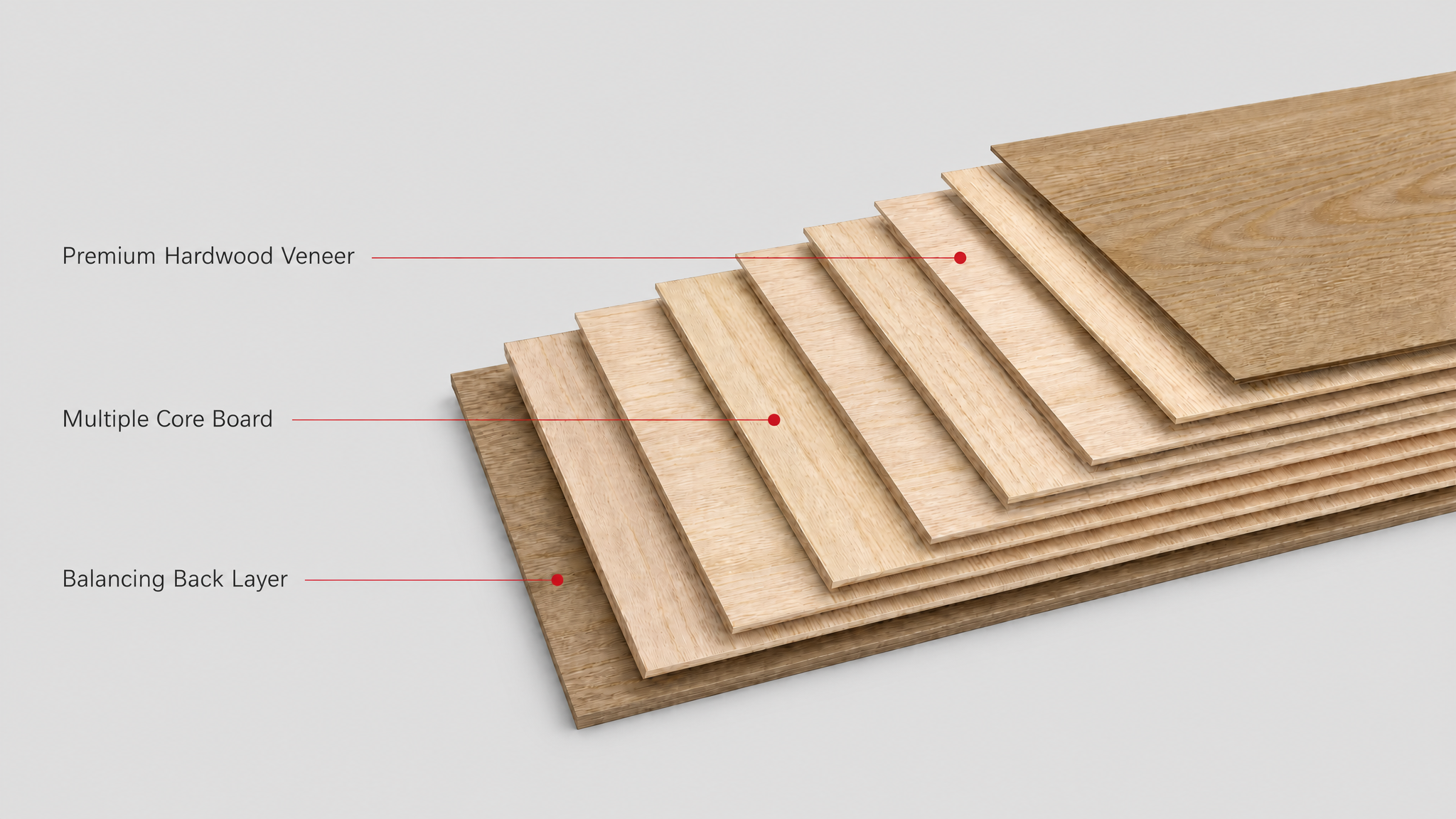

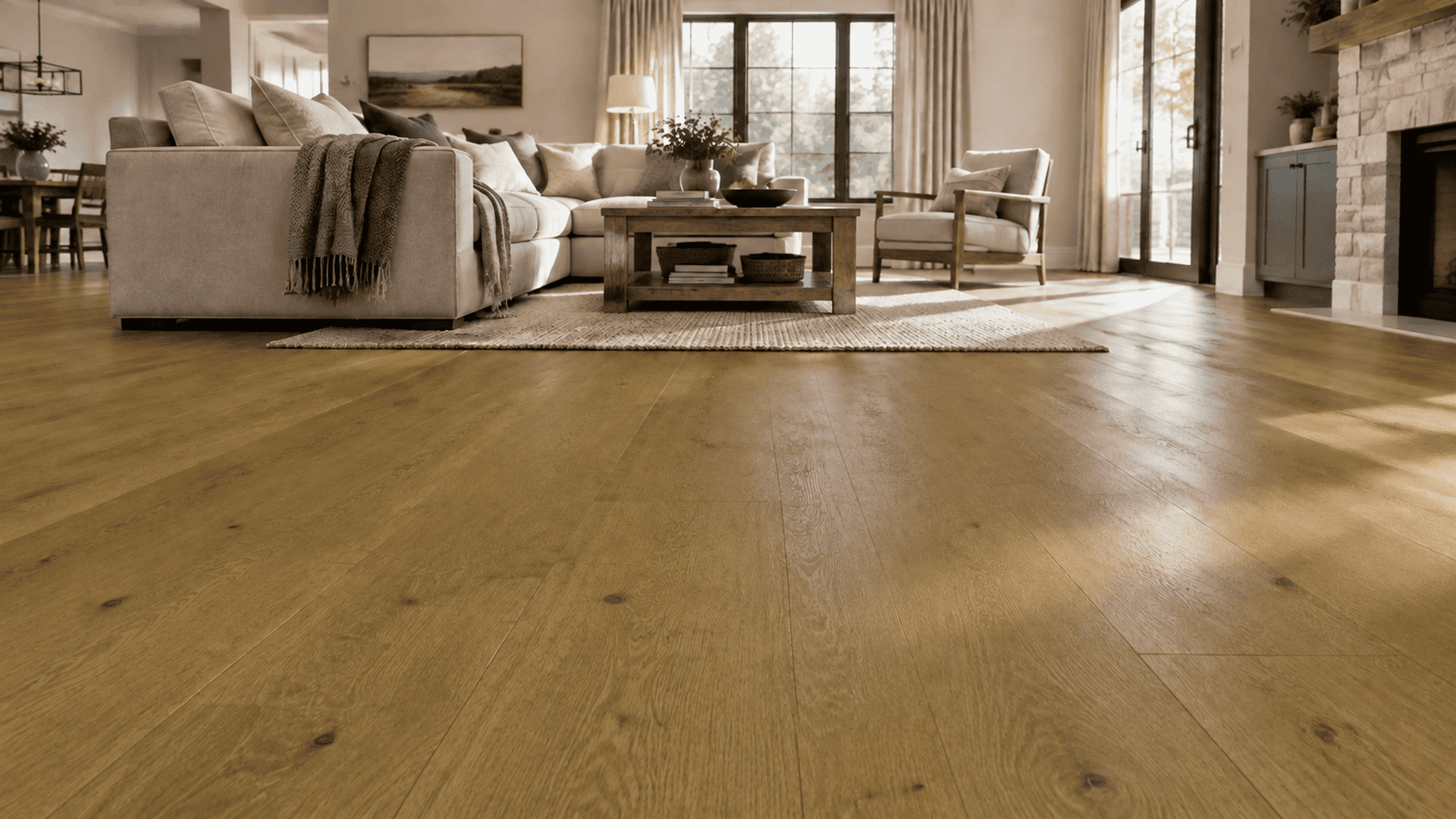
 When evaluating resilient flooring, specifications such as total thickness, core construction, and underlayment often receive most of the attention.
But there is another number that plays an important role in understanding the surface performance of a floor: wear layer thickness.
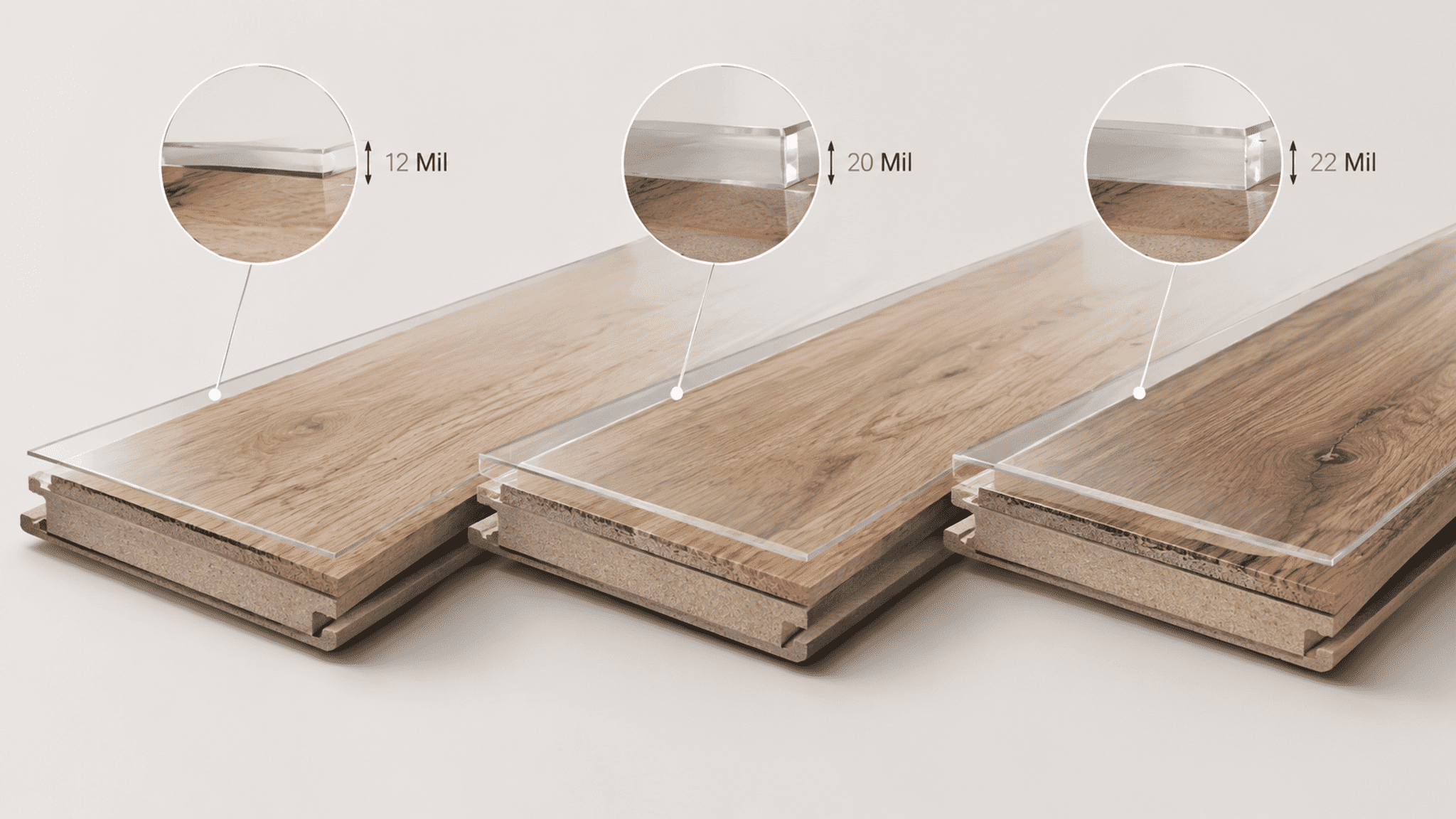
You may see flooring labeled as 12 Mil, 20 Mil, or 22 Mil. These numbers describe the thickness of the transparent protective layer above the decorative surface. While a higher number generally indicates a thicker protective layer, wear layer thickness should always be considered together with the overall construction and intended application of the flooring.
1. What Is a Wear Layer?
The wear layer is the protective surface layer located above the decorative layer of resilient flooring.
It is designed to help protect the visual surface from the effects of everyday use, including foot traffic, scratches, scuffs, and general surface wear.
Because it sits directly above the decorative layer, the wear layer has an important role in maintaining the appearance of the flooring over time.
A floor may have a realistic wood pattern and carefully designed surface texture, but the visual design alone does not tell the whole story. The protective layer above it is also part of the flooring system.
This is why wear layer thickness is commonly included in flooring specifications.
2. What Does “Mil” Mean?
Wear layer thickness is commonly expressed in Mil rather than millimeters.
A Mil is a unit used to describe the thickness of the wear layer, and it should not be confused with a millimeter.
For example:
- 12 Mil — a thinner wear layer specification
- 20 Mil — a thicker wear layer specification
- 22 Mil — an even thicker wear layer specification
The difference between these numbers may appear small when viewed on a specification sheet, but the wear layer is specifically engineered as part of the floor's surface protection system.
More importantly, the number should not be viewed independently from the rest of the plank construction.
3. How Does Wear Layer Thickness Affect Flooring?
A thicker wear layer provides more material between the decorative surface and the everyday wear that flooring experiences.
This becomes particularly relevant in spaces where floors are exposed to frequent foot traffic or regular daily activity.
However, it is important to understand that wear layer thickness is only one part of flooring performance.
The core, total thickness, backing or underlayment, surface treatment, embossing, and installation system can all contribute to the finished product.
In other words, a flooring specification should be read as a complete construction rather than as a collection of isolated numbers.
4. How Do 12 Mil, 20 Mil and 22 Mil Compare?
Baltic Home's SPC flooring portfolio includes products with different wear layer specifications, including 12 Mil, 20 Mil, and 22 Mil, depending on the collection and product configuration.
For example, the catalog includes 6.5 mm SPC products with a 20 Mil wear layer, while the 8 mm Quiet Ridge Collection features a 22 Mil wear layer. Other SPC configurations in the catalog are specified with 12 Mil or 20 Mil wear layers.
The purpose of offering different specifications is not simply to create different numbers on a product sheet.
Different flooring constructions are developed for different product configurations and performance requirements.
For example, Baltic Home's 22 Mil SPC products are presented with an enhanced wear layer and are designed around durability and surface protection. The catalog also pairs these products with an AquaTech™ Moisture Barrier Core and click-lock installation system.
The important point is that wear layer thickness should be understood within the complete flooring construction.
 5. Wear Layer vs. Total Thickness
One of the most common misunderstandings is assuming that a thicker plank automatically has a thicker wear layer.
These are two different specifications.
Total thickness refers to the overall thickness of the flooring product, including its structural layers and, where applicable, attached underlayment.
Wear layer thickness refers specifically to the protective layer at the surface.
For example, Baltic Home's Cozy Step WPC Collection has a total thickness of 10 mm, consisting of an 8.5 mm flooring body and 1.5 mm IXPE backing, while its specified wear layer is 20 Mil.
This illustrates why looking at only one number can give an incomplete picture of a flooring product.
6. The Complete Construction Matters
A flooring product is not defined by its wear layer alone.
In WPC flooring, for example, Baltic Home's TriComfort™ Layered Support System combines a plush LVT surface, micro-foam core, and 1.5 mm IXPE backing. The Cozy Step Collection is specified at 10 mm total thickness with a 20 Mil wear layer.
SPC flooring follows a different construction approach, using a rigid core together with its surface and backing layers. Baltic Home's SPC products are available in different total thicknesses, underlayment configurations, and wear layer specifications across its collections.
This is why comparing flooring only by a single specification can be misleading.
A better approach is to look at the entire construction:
Wear Layer + Decorative Surface + Core + Underlayment + Installation System
Each component contributes to the final flooring product in a different way.
Why Does Wear Layer Thickness Matter?
A floor is exposed to daily use from the moment it is installed.
Shoes, furniture, movement, cleaning, and regular foot traffic all interact with the surface.
The wear layer is the part of the construction specifically designed to help protect that surface.
But a flooring product should never be evaluated by wear layer thickness alone.
The right questions are broader:
- How thick is the wear layer?
- What is the total flooring thickness?
- What type of core does the product use?
- Does it include attached underlayment?
- What surface texture or finish does it have?
- How is the flooring installed?
- What type of application is the product designed for?
Understanding these specifications together makes it easier to compare flooring products based on their actual construction rather than simply comparing numbers.
 Look Beyond the Number
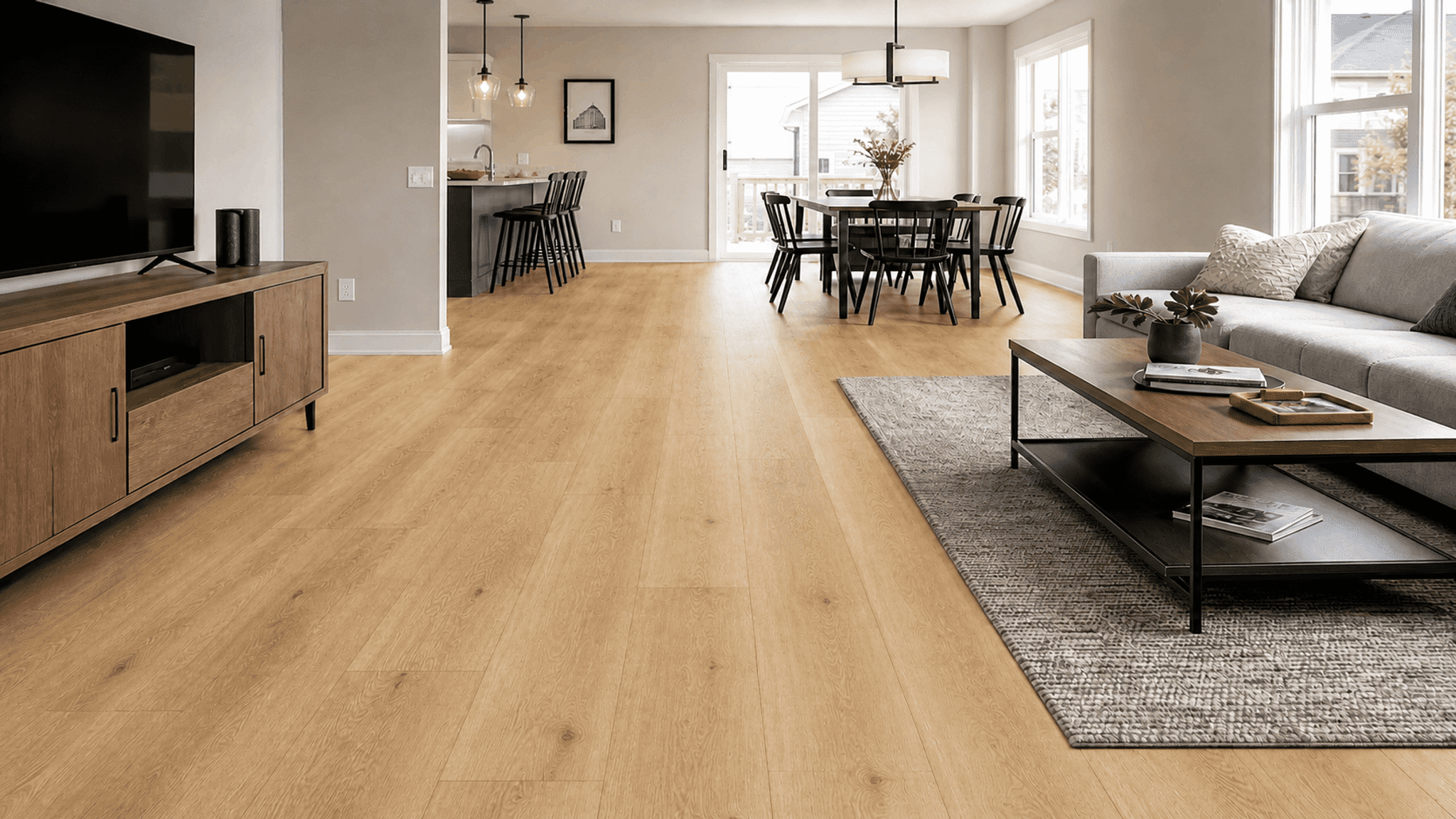
A 12 Mil, 20 Mil, or 22 Mil specification tells you something important about the flooring—but it does not tell you everything.
The wear layer is one part of a much larger system.
When evaluating resilient flooring, look beyond the number and understand what sits underneath it.
Because flooring performance is built layer by layer.